


How it works
From fragmented sources to a common data model your team has approved
Neuroplastiq works in five steps. People review and approve every change to the model.
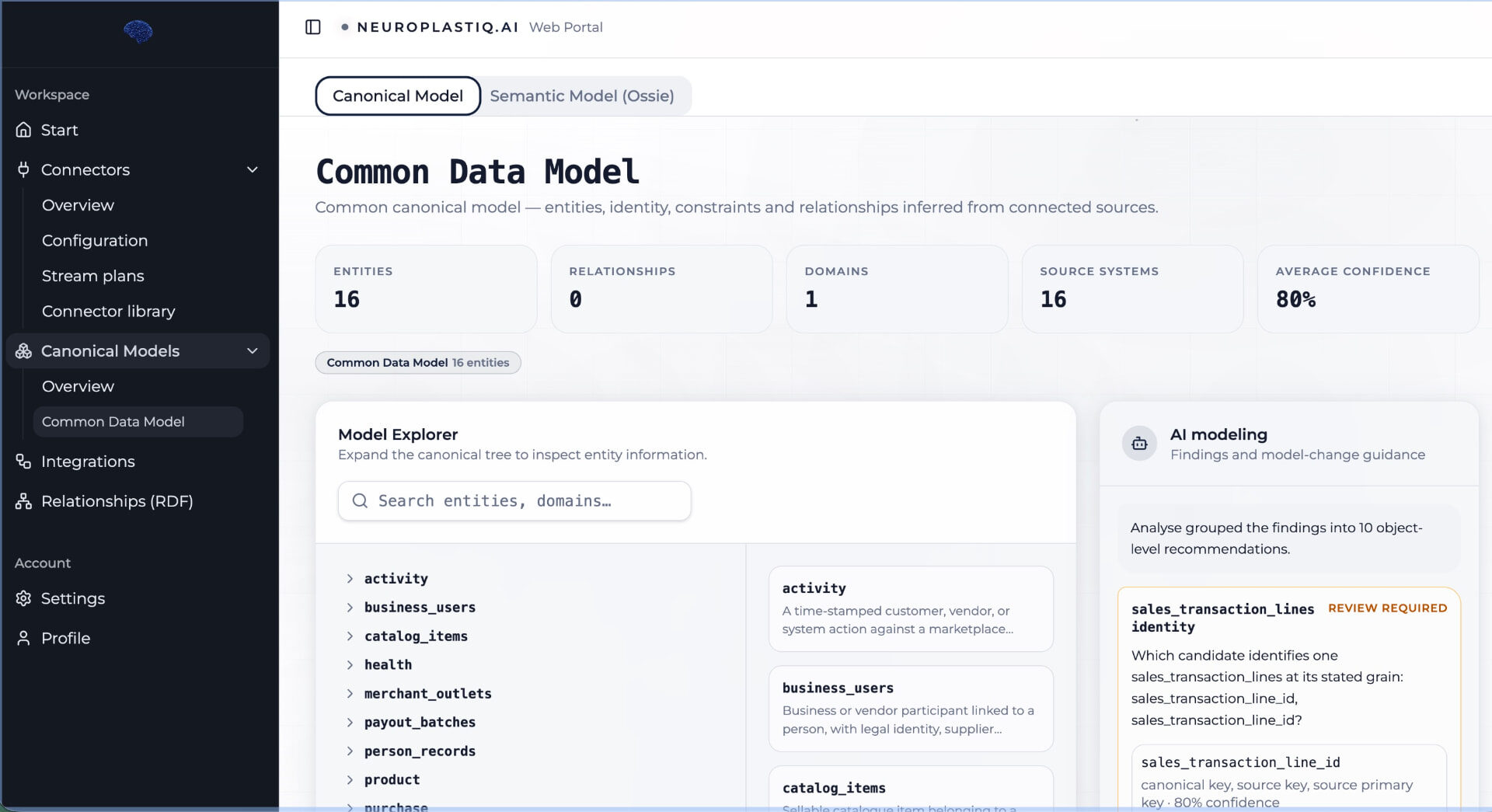
Step 1
Connect your sources
Point Neuroplastiq at the source systems you want to understand.
Neuroplastiq scans the structure of your connected source systems: their objects, attributes and the relationships between them.
We confirm which of your source types are covered, and the access Neuroplastiq needs, during the demo.
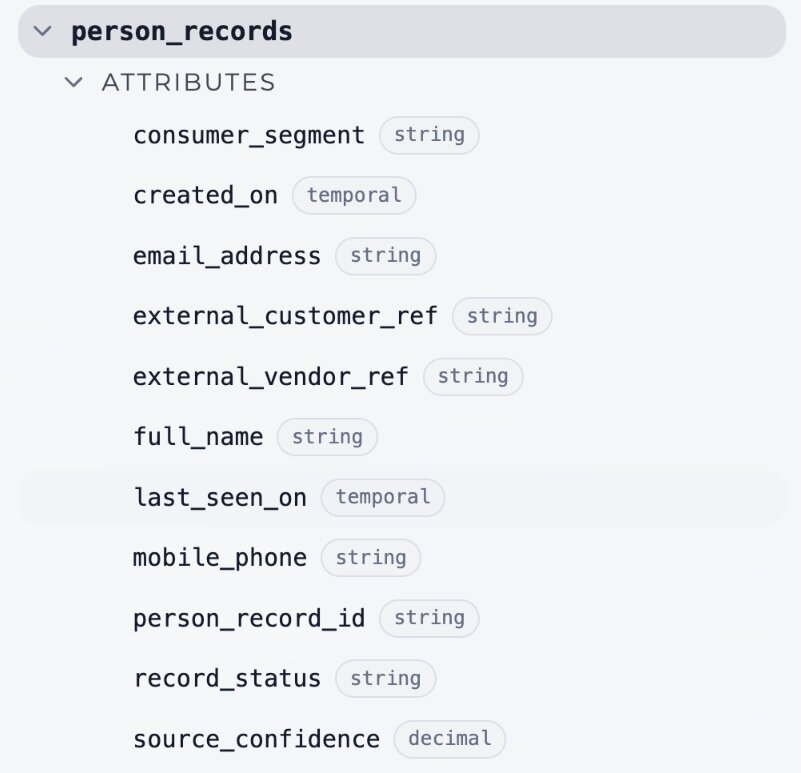
Step 2
Review the suggestions
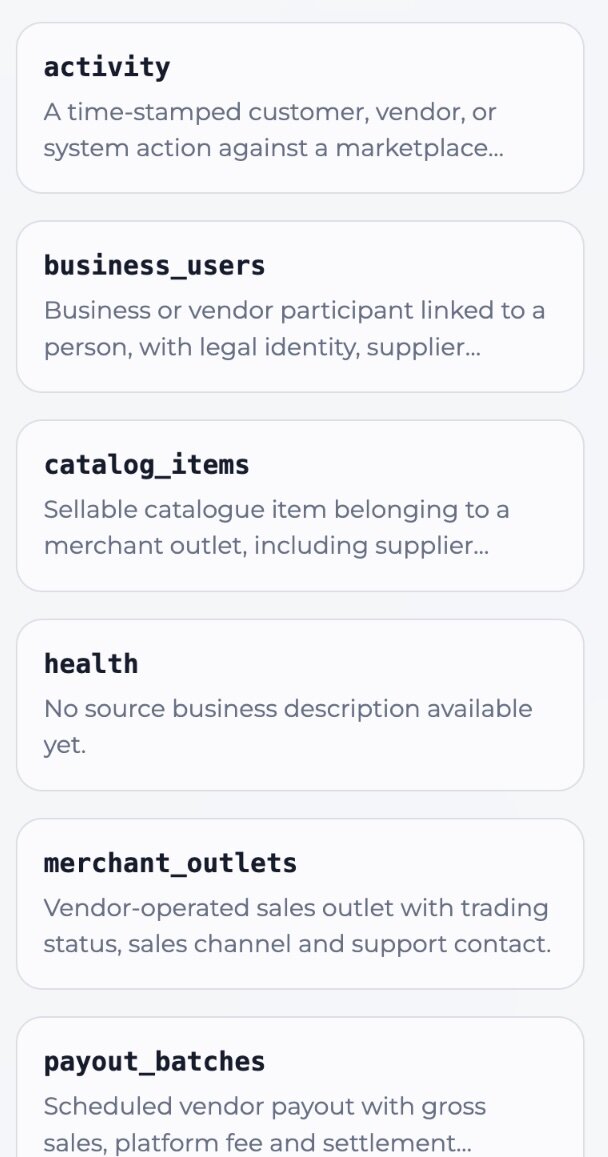
See proposed definitions, attributes, relationships and mappings, with the reasoning behind them.
Each proposed entity comes with a plain-language definition and its attributes, so your team can check that the model matches how the business talks about its data.
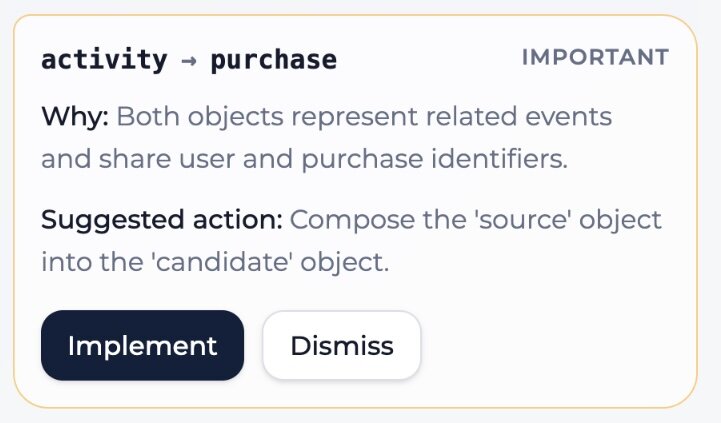
Recommendations explain why they were made and what action is suggested, such as composing two related objects into one. Items that need a decision, like which attribute identifies a record, are flagged for review.
Duplicate or inconsistent data shows up here, along with opportunities to simplify your systems.
Step 3
Build your common data model
Neuroplastiq forms the canonical and semantic models, allowing your team to refine as required.
Every suggestion is a proposal. People decide whether to implement or dismiss it, and the model only changes when approved.
The result is a common data model your team has inspected and agreed, rather than a document that drifts away from how systems behave.
Step 4
Connect your platforms
Leverage the common data model to integrate systems, populate the data warehouse and stream data.
The common data model establishes shared definitions. The semantic layer makes that agreed business meaning available to the analytics and AI tools that consume your data.
We show the semantic model and the interfaces supported by the current release in the demo.
Step 5
Keep it up to date continuously
When sources change, your team reviews the proposed updates before they reach the model.
Source systems keep changing. Neuroplastiq helps your team see what changed and what it affects.
Proposed updates go to your team for review. Changes are not applied to the model without someone approving them.
Where it fits
Alongside the tools you already run
- Neuroplastiq works alongside the tools you already have, including ingestion and ELT tools, dbt and your warehouse layers.
- It focuses on what your data means: the shared definitions your integrations, analytics and AI tools rely on.
- A common data model establishes shared definitions. A semantic layer makes agreed business meaning available to analytics and AI tools.
Source systems
CRM, billing, wallet, marketplace and other applications
Neuroplastiq
Scans sources and proposes a common data model for your team to review
Data warehouse
Where the agreed model is used by your existing tools
Integration, analytics and AI
Consumers that rely on the shared definitions
Security and control
Your team stays in control of the model
- Suggestions do not change your common data model. A person implements or dismisses each recommendation, and the model only changes when approved.
- Recommendations show their reasoning, so reviewers can check the evidence before acting.
- Questions that need business judgement are flagged as needing review rather than decided automatically.
- We walk through deployment options, what Neuroplastiq can access and how AI is used, for the release being demonstrated, during your demo.
FAQ
Common questions
- Does Neuroplastiq replace dbt?
- No. Neuroplastiq works alongside dbt, your ingestion tools and your warehouse layers. It helps your team agree what the data means; your existing tools keep doing the transformation work.
- Does Neuroplastiq move data?
- Neuroplastiq focuses on understanding source systems and building the common data model. Moving data is usually handled well by the ingestion and transformation tools you already run. We walk through how Neuroplastiq connects to your sources and warehouse in the demo.
- How are suggestions reviewed?
- Each recommendation shows why it was made and the suggested action. A person implements or dismisses it. Items that need a business decision are flagged as needing review, and the model only changes when someone approves the change.
- Which platforms are supported?
- Coverage depends on your source systems and warehouse. Tell us what you run when you request a demo, and we will confirm what the current release supports for your stack.
- How do we evaluate fit?
- Book a demo. We show Neuroplastiq proposing a common data model from sample sources, then discuss your systems, your analytics and AI goals, and whether the product fits.
See Neuroplastiq working on sample sources.
We will walk you through the solution and understand your systems and goals to ensure we can deliver value for you.